

Why You Must Send Your ECU With Your CAS, EWS, or FEM
 By JEREMY PROOME on Jul 31, 2026
A question we get here at The ECU Pro constantly: “I only have a problem with my CAS (or EWS, or FEM), so why do you need my ECU too?”
It’s a fair question, but the reality is that in order to ensure that your problematic part works correctly, we need the ECU to clarify it due to the synchronization of these units.
Your security modules are married to your DME
In BMW and Mini vehicles, the immobiliser and body modules work in conjunction with one another and don’t actually operate independently. These various control units are essentially paired with the engine computer (the DME/ECU). The CAS or EWS has to confirm communication with the DME before the car will start. That marriage is a security feature. Without that feature, someone could simply swap the one module and steal your car.
Because of that pairing, we can't fully verify a CAS, EWS, or FEM by itself. To confirm the repair or replacement actually works, we need to see it “talking” to your DME, exactly as it does in your car.
What “plug-and-play” really means here
When we say a repair is “plug-and-play”, we really mean it. Once you get your reworked unit back, you simply bolt it back in, plug it in, and your vehicle will be good to go with no extra programming at your end.
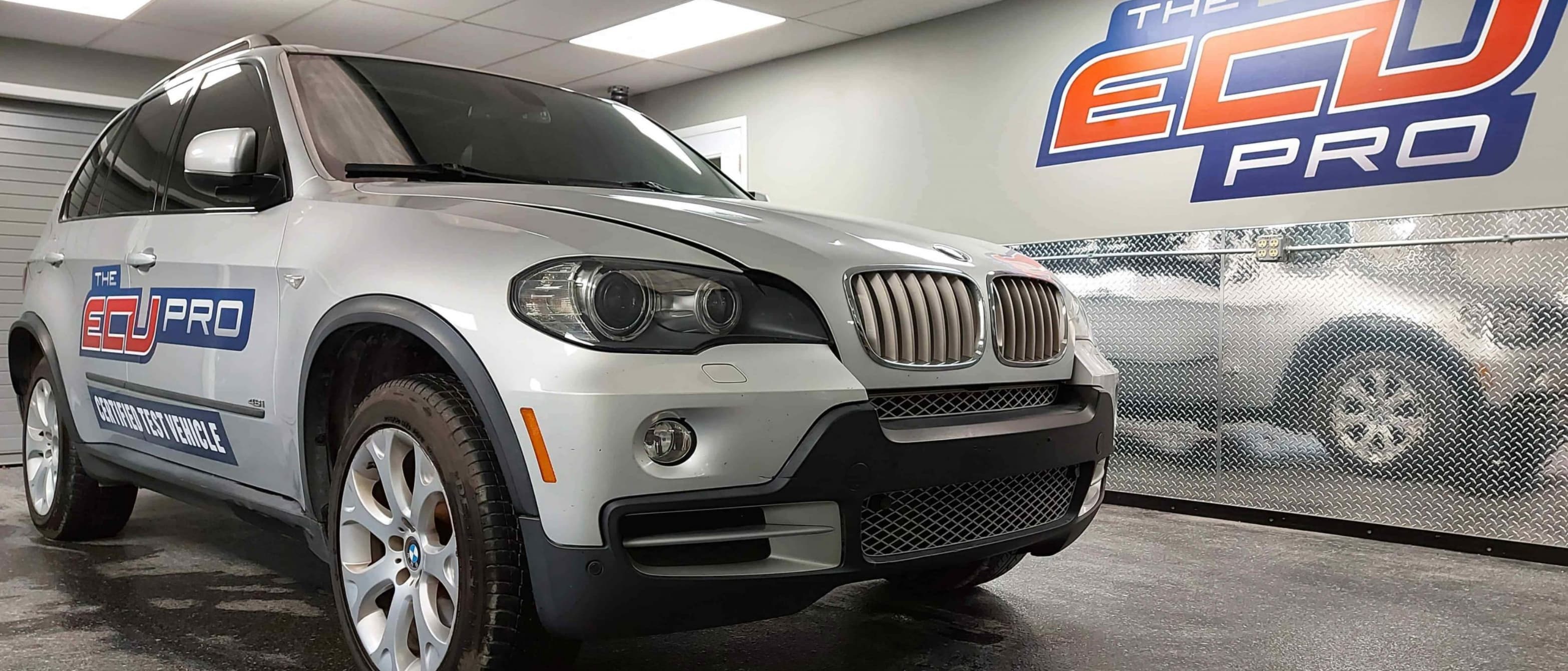
To guarantee it works, we install your equipment in one of our test vehicles in our garage to confirm the repair (or replacement) works. We ensure all communication is working before it ever ships back to you.
A real example: We had a customer who replaced their starter, but the car still wouldn't crank. They sent in the EWS and key, but we still needed the ECU because without it, we couldn't confirm the EWS-to-ECU communication that actually lets the car start. This is why it's important to have the ECU too.
Sometimes the DME is the real problem
Sending the ECU also lets us catch issues you didn't know you had. We've seen cars that cranked but wouldn't start. One example saw a vehicle where the root cause was corrupted DME software, not the security module at all. Reprogramming the DME fixed it. If we'd only had the CAS, we wouldn’t have spotted the main culprit in the problem.
What to send in:
For CAS, EWS, or FEM/BDC work, send:
-
the module itself (CAS / EWS / FEM / BDC),
-
your DME/ECU, and
-
your key(s).
That set lets us test everything together, catch secondary issues, and verify a true plug-and-play result. Not sure how to remove or pack them? Find out here.
Can't you just test the CAS/EWS on its own?
Not reliably. The module is paired with the DME; we need both to confirm they communicate.
Will sending my ECU cost more?
No. Testing them together is standard. It sometimes reveals a DME issue, which we'll quote separately and only fix with your approval.
Is my data or tune safe?
Yes. We handle your equipment carefully and verify the final result in a test vehicle before returning it.
Getting a CAS, EWS, or FEM repaired? Send the module, your ECU, and your key together. We'll then test the whole set, confirm they communicate, and verify a plug-and-play fix on video, which you’ll receive.
Start your mail-in testing process here.
Mail in automotive electronic repair services
The ECU Pro offers an affordable mail-in repair service for automotive electronics. To have your unit repaired, simply remove the part and mail it to us. Our professional team will either test, repair, or clone your unit.
Our team has over 30 years experience in automotive electronic repairs. We specialize in German vehicles such as BMW, Mercedes and Mini. Our main focus is engine control unit repairs ( ECU, PCM or DME). Our state of the art facility has over 30 test vehicles to ensure that all parts are tested in actual vehicles before being returned to our clients.
Most of the services we provide is plug and play and doesn't require any additional coding.