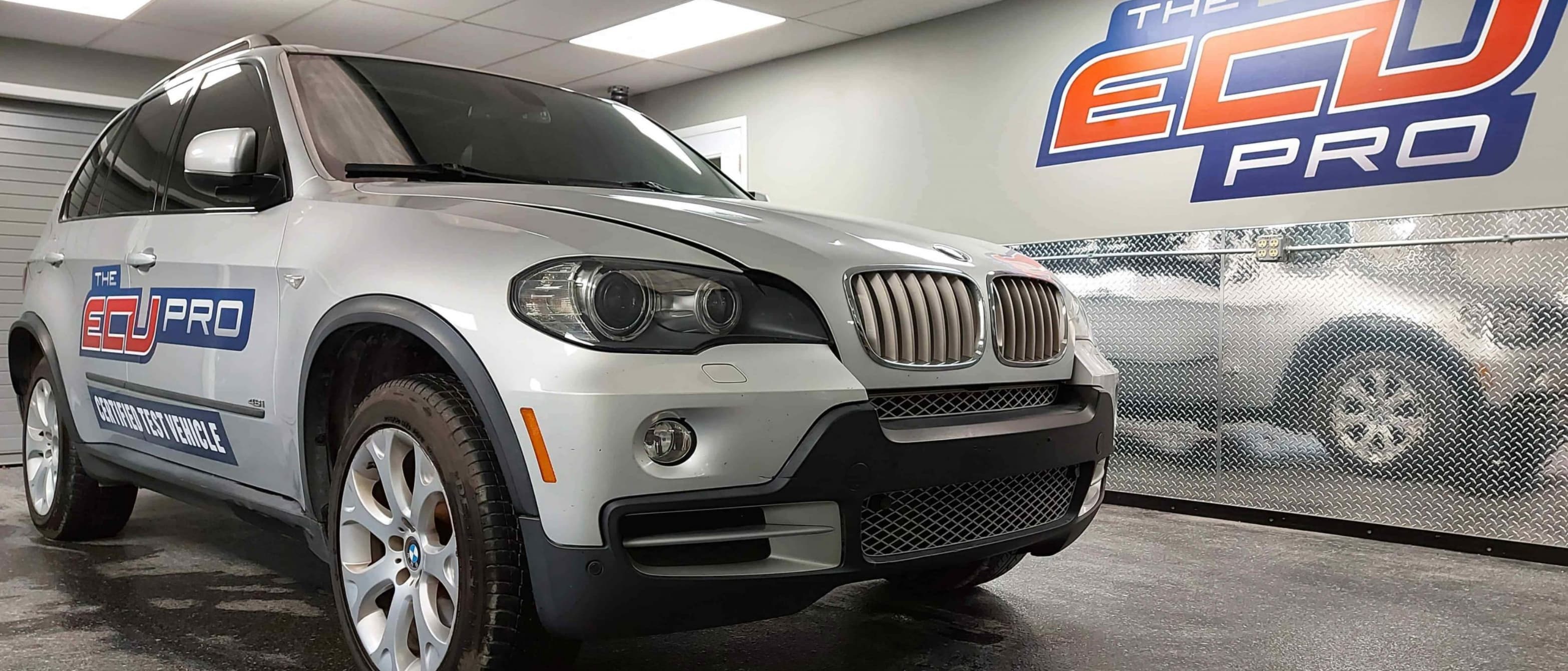


Diesel Fuel Wicking into the DDE: Why Your BMW X5 35d Loses Communication
 By JEREMY PROOME on Aug 18, 2026
For owners of BMW X5 models, specifically the 35d or 30d variants, who are experiencing their vehicles in limp mode, there’s a common cause and solution for the problem, and it has to do with the DDE itself.
Many drivers who encounter this limp mode problem often begin looking at the injectors, EGR parts or other components, purely because the fault codes the vehicle produces resemble those of fuel-injector or emission system problems; but the core of the issue is often diesel or fluid finding its way into the DDE.
The ECU Pro offers affordable BMW DDE repairs and replacements through its handy mail-in service.

First and foremost, the DDE stands for Digital Diesel Electronics. In vehicles (most notably BMW), it is the specific ECU (Engine Control Unit) used to manage and control diesel engines, much like a standard ECM or BMW's petrol equivalent, DME (Digital Motor Electronics).
If any of the following symptoms are experienced with your diesel X5, you likely have a DDE issue:
- Constantly going into limp mode
- Engine malfunction warning
- Error codes for particulate filter
- Injector fault signals despite having checked/replaced them
- No communication with unit
- Reverting to stock settings (common with performance-tuned X5 models)
Common DDE fault codes
There are a variety of common DDE fault codes that can be checked and referenced here., but with regard to this particular issue, it's important to remember that the fault code by itself doesn't establish diesel contamination of the DDE, because symptoms may occur with DDE/harness problems, rather than the DDE itself.
Due to the nature of this problem and the various components that could cause the DDE or other components to register a fault, it's always best to get your DDE tested.
This is why we aim to reproduce the error and thoroughly test to correctly identify what the core problem is.
Why it happens
The reason this happens is often due to diesel getting into the DDE housing itself. How does this happen exactly? A process called ‘wicking’ sees diesel migrating along the actual wire from the connector harness or cables and working its way into the DDE unit.
Depending on how much fuel gets in and where it pools, the result ranges from intermittent injector faults and limp mode, all the way up to a completely dead, non-communicating unit.
How we identify this problem
The best way to determine the fault is through physical inspection via testing, so we require the DDE to look inside it. Upon confirmation, we then know the DDE will need to be replaced, because if diesel has reached the board, it can’t be repaired.
So, that’s essentially how these jobs are managed: first step is to reproduce the customer's reported fault on the original unit on the bench, then we open it and inspect. What we find inside (whether it be diesel intrusion, corrosion, or internal chip damage with no fuel or shorting present) determines everything that happens next.
What it's NOT
Before diving into the repair, we use a process of elimination to work out what’s not causing the DDE error. These are some of the most common issues that aren’t actually the primary problem:
-
It's usually not the injectors. Injector fault codes are a common symptom of a fuel-contaminated DDE, rather than the injectors themselves being bad.
-
It's usually not the particulate filter or EGR system. Limp mode and particulate filter codes get people chasing DPF and EGR components when the actual cause is upstream, usually found in the control unit itself.
-
It's not always diesel, either. In some of these units, what looks the same on the outside turns out to be antifreeze/coolant corrosion instead of fuel intrusion. It might be a different fluid damaging the unit, but the outcome is the same: an unrepairable board. Either way, the fix is the same, but it's worth knowing the cause isn't always the fuel sensor.
Replacing injectors, EGR valves, or DPF components on a diesel-flooded DDE won't fix anything, and it's money spent focusing on the wrong components.
What happens during the repair
Once the unit has been inspected internally and confirmed to have been damaged by diesel (or another fluid), we first know that the DDE board is unrepairable. From there, the path depends on what we find:
-
If we find diesel intrusion with no communication, or injector faults that reproduce on the original unit.
-
Solution: we then build a replacement using new or donor DDE hardware, adapting the files to your vehicle and pulling the ISN from your CAS or FEM module to match the replacement's immobiliser coding to your car.
-
Internal memory-storage components damaged but the board itself isn't shorted or fuel-contaminated.
-
Solution: We program a donor unit and match the ISN to your CAS, rather than doing a full clone from scratch.
-
Faults that only appear when the unit is heated, with no fuel or corrosion present.
-
This is the one scenario where the original unit may still be recoverable through board-level rework rather than replacement.
Every rebuilt or cloned unit gets verified on our test vehicle before it goes back out, and we send video proof of it running.
Repair vs. clone: what to actually expect
As mentioned above, if your DDE is damaged by fuel getting inside the unit, it most likely is unable to be repaired, but it depends on a few things:
- how much contamination occurred
- what components were damaged
- whether corrosion developed
- whether power/ground circuitry was damaged
- whether the PCB can be cleaned successfully
- whether components/traces can be repaired
Other cases with lower internal corrosion or heat-induced damage can be repaired without a full replacement. The only way to know which category your unit falls into is to open and test it.
If a replacement is needed, a new DDE will be cloned and coded to your car so you can get driving again as soon as possible.
An important caveat
While we can repair or replace your DDE (depending on its damage), it's important to understand how and why the diesel or fluid made its way into your DDE in the first place. The 'leaking' component, whether it be a pressure sensor or damaged harness connector, needs to be assessed, otherwise the problem will return and your new or repaired DDE will get damaged again.
Frequently asked questions
Can a DDE with diesel inside it be repaired?
It's dependent on how severe the contamination is. Once we’ve confirmed diesel did. in fact made its way into your unit, and how severe the damage is, we can then look at a repair or replacement plan.
Will my EGR/DPF delete and tune carry over to the replacement?
Not automatically. If your original files were corrupted (common with a flooded unit), the replacement is built from clean base files matched to your CAS, which means it runs the stock map until your tuner reapplies the delete and tune.
Why does my test video show fault codes if the repair worked?
Codes shown during our test-vehicle verification are typically caused by differences between your car and our test vehicle, not a failed repair. We flag which ones to expect and talk you through this process.
Does this affect the X5 30d as well as the 35d?
Yes, we've seen this same diesel fuel intrusion failure in the DDE on both the 35d and 30d variants.
Is it always the fuel sensor wicking, or could it be something else?
The intrusion of diesel into the DDE is often due to the fact that the fuel sensor harness is attached to the DDE unit, but coolant/antifreeze intrusion can produce a similar dead-unit outcome from a different source. Either way, it requires opening the unit to confirm.
Stuck in limp mode, chasing injector or DPF codes, or got a dead DDE with no communication? Send it in for testing. We'll confirm whether it's fuel intrusion, corrosion, or something else, and get you a real repair-or-clone answer with video proof before anything ships.
Start your ECU/DDE testing process here!

Mail in automotive electronic repair services
The ECU Pro offers an affordable mail-in repair service for automotive electronics. To have your unit repaired, simply remove the part and mail it to us. Our professional team will either test, repair, or clone your unit.
Our team has over 30 years experience in automotive electronic repairs. We specialize in German vehicles such as BMW, Mercedes and Mini. Our main focus is engine control unit repairs ( ECU, PCM or DME). Our state of the art facility has over 30 test vehicles to ensure that all parts are tested in actual vehicles before being returned to our clients.
Most of the services we provide is plug and play and doesn't require any additional coding.