

Mini Key Fob Not Working? Failed Key Programming & Immobilizer Lockout Explained
 By JEREMY PROOME on Sep 2, 2026
Starting or cranking issues with Mini Coopers, Clubmans, or Countrymans are often a result of a problematic CAS or the key fob itself. But, it can sometimes be a little tricky to rule one or the other component out. Here’s what to look out for, and how to diagnose and resolve your no-crank or no-start issue with your Mini.
The ECU Pro offers an affordable mail-in MINI car access system (CAS) repair service along with key fob replacement.

What the CAS does on a Mini turbo
The CAS (Car Access System) does exactly what the name implies: helps provide access and starting authorisation to the car, acting as a gatekeeper between your key and engine. Only if all the correct signals are received, the key then signals to your car’s DME to release fuel and let the engine crank and start.
A small number of newer chassis in this Mini family use the FEM instead, which handles that same key-authorization role in those cars, but the CAS is what we see in nearly every one of these lockout cases.
If anything interrupts or something doesn’t work during this authorisation process, the CAS won’t ‘allow’ the vehicle to start. This is a safety mechanism against theft, as well as a way to protect the engine if something is malfunctioning.
Common symptoms
Most drivers who bring their vehicles in to inspect the CAS or key are often experiencing the following problems:
-
The ignition won't turn on.
-
The car won't crank at all.
-
One of the keys just stopped working.
-
The key doesn't respond anymore.
-
Starting and cranking problems when the vehicle is hot.
If any of these are experienced, it’s likely the CAS or the key. However, something else could trigger a similar issue, hence why it’s always best to test before guessing.
How we tell a dead key from a CAS fault (and rule out the DME)
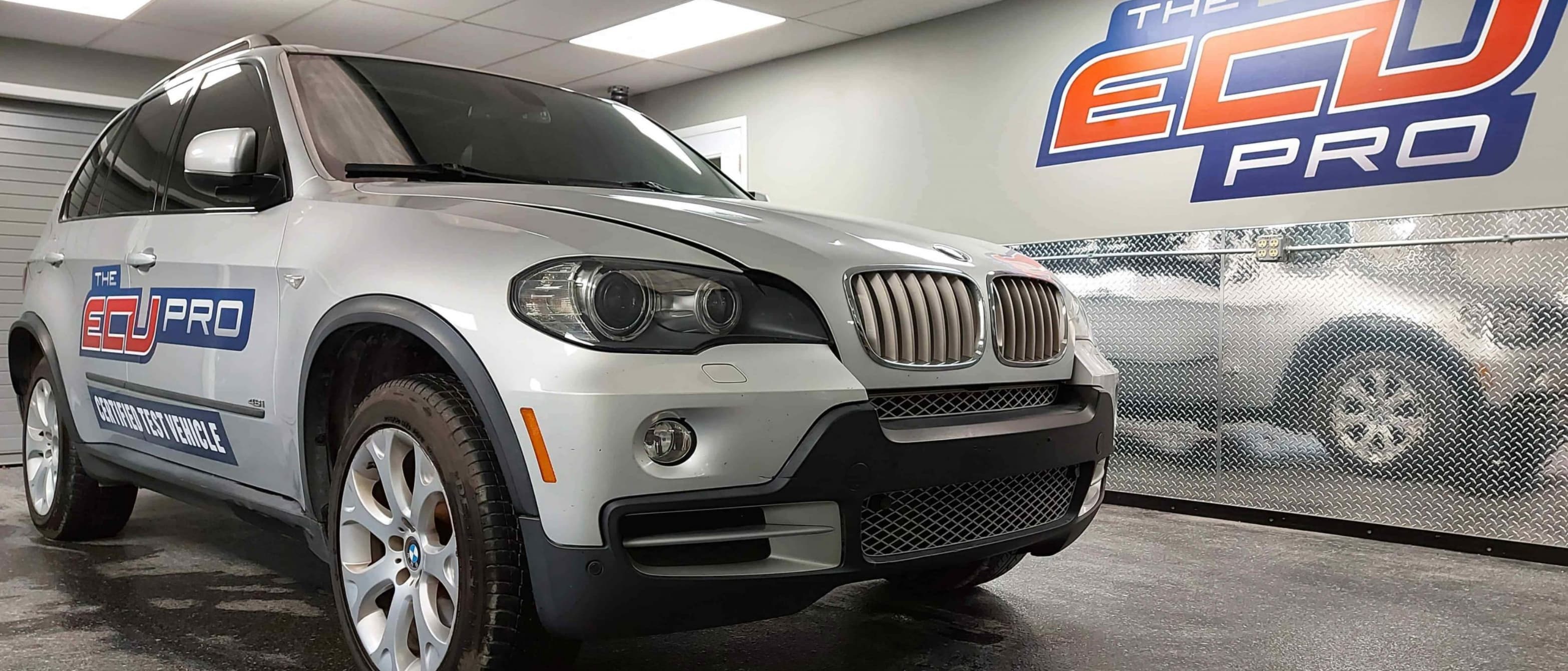
Figuring out which component, whether the CAS or key, is causing the issue is vital. So, what we do is test both the DME/CAS and your keys on our own Mini turbo test vehicle. We will then recreate your vehicle’s scenario to see what the problematic component may be.
What we find, more often than not, is that the module cranks and starts on the first try. That result actually tells us a lot, because it means the DME and CAS are electronically sound, and the real fault lives somewhere else in the authorization chain: a transponder that's gone dead inside the key, or a CAS that only misbehaves once it warms up.
For a suspected heat-related fault, we can reproduce it directly. We are able to do this by heating the CAS to roughly 250°F on the bench and then inspect for the same symptoms. If they show up at that temperature and clear once things cool back down, that confirms a heat-sensitive component issue inside the CAS rather than anything wrong with the key or the engine side.
As with all our tests, we send a video of your mailed-in parts working in our test vehicle, so you have peace of mind that the comprehensive tests are done.
What it's usually not
Often, the DME is pointed at as a problem-point when there are no-crank and no-start issues, but in many cases, it actually has nothing to do with the engine computer. This is why we will test the CAS and key, and if there’s no solution found there first, we can then look at the DME, but this is done to save you a costly headache and a DME swap for no reason.
The process of testing and repair:
Upon testing your CAS and key, we can then ascertain what the issue may be, and proceed with the following solutions:
-
Dead key transponder or all keys lost: we cut and program a new key directly to the CAS, restoring the authorization to the car.
-
Faults only appear once the CAS is heated: we repair the affected control components inside the CAS itself and re-verify the fix holds under heat.
-
DME cranks, starts, and runs clean on our test vehicle: the module is confirmed healthy, and depending on what the customer needs, it's either returned as-is or a programmed clone is provided while the original is sent back.
-
The fault only ever shows up back in the actual car, or while driving: that points to something on the vehicle side rather than the module, and we flag it so the customer can chase the right lead instead of the CAS.
What the repair actually involves
-
New or additional key: If you require a new key, we’ll program the key directly with your CAS, restoring the match between transponder and module so the car recognizes it as authorized.
-
CAS repair: where testing shows a heat-triggered internal fault, we rework the affected components on the control circuit and re-test at elevated temperature to confirm the fix holds before it ships back.
-
DME verification: if the module is tested and successfully working, we won't do any unnecessary work
Frequently asked questions
My key still opens the doors, but it doesn’t start the car. Why?
Locking and unlocking use different signal paths than starting the car. A dead transponder or an authorization issue with the CAS can leave remote entry working perfectly while ignition authorization fails completely.
Do I need to send in my whole car?
No, all you need to do is send your DME and CAS together with your keys via our mail-in service.
Should I replace my DME if the car won't crank?
It may not solve the problem, and this is why we test. In these cases the DME is often fine, and therefore replacing it doesn't fix a bad key or a heat-sensitive CAS fault.
Is this repairable, or do I need a new CAS?
In most cases, repair is possible. If it’s a heat-related issue with the CAS or key, we are able to resolve these, preventing you from having to buy a new CAS.

Start a CAS test / repair
Mail in automotive electronic repair services
The ECU Pro offers an affordable mail-in repair service for automotive electronics. To have your unit repaired, simply remove the part and mail it to us. Our professional team will either test, repair, or clone your unit.
Our team has over 30 years experience in automotive electronic repairs. We specialize in German vehicles such as BMW, Mercedes and Mini. Our main focus is engine control unit repairs ( ECU, PCM or DME). Our state of the art facility has over 30 test vehicles to ensure that all parts are tested in actual vehicles before being returned to our clients.
Most of the services we provide is plug and play and doesn't require any additional coding.